
 SEO Strategy
How to Rank in People Also Ask


How to Rank in People Also Ask Boxes (My Proven Method)
You've poured hours into crafting that perfect blog post. Your research is solid, your writing is engaging, and you've optimized for your target keywords. Yet somehow, you're still invisible in Google's People Also Ask (PAA) boxes while your competitors snag those coveted extra snippet spots.
This invisibility costs you. PAA boxes don't just offer additional real estate in search results - they position your content as the authoritative answer to follow-up questions. When someone clicks through from a PAA snippet, they're already primed to view you as the expert.
74% of PAA appearances are from websites not ranking on page 1 for that search. This means that if you’re only optimizing for regular keywords, you’re probably missing out on other areas.
That's where a systematic approach to PAA optimization changes everything. Instead of just hoping Google notices your content, you can strategically target PAA questions using tools like Answer Socrates' PAA Extractor to:
- Identify exactly which questions and answers appear in search results
- Extract them in organized formats
- Structure your content to maximize ranking potential
The process isn't complicated; it just requires knowing which questions to target and how to format your answers for maximum algorithmic appeal.
How to Rank in People Also Ask Boxes
Ranking in PAA boxes requires a methodical approach that goes beyond simply answering questions. You need to identify the right opportunities, structure your content strategically, and build the topical authority that signals to Google that your site deserves featured placement.
I’ve broken my process down into five steps that you can follow, too:
Step 1: Understand search intent to find PAA opportunities
Before diving into PAA optimization, you need to understand that Google doesn't display People Also Ask boxes for every search query.
They appear strategically based on search intent, query complexity, and user behavior patterns - meaning your optimization efforts need to target the right types of keywords from the start.
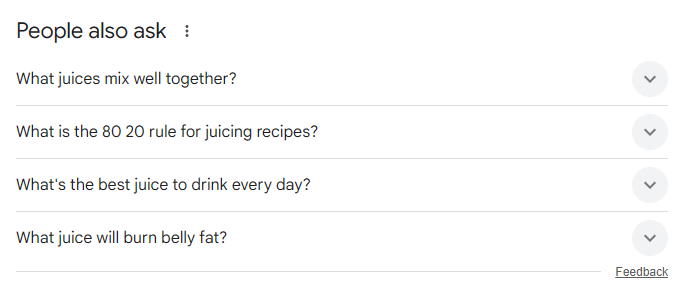
Google typically displays PAA boxes for informational queries where users seek comprehensive understanding rather than quick answers. These are often questions starting with starting with "how," "what," "why," "when," and "can", but problem-solving queries like “ways to…” and “best practices for…” are also good to target.
Think about the psychology: someone searching "juice recipes" might wonder "What juices mix well together?" or "What juice will burn belly fat?" These natural follow-up questions make PAA boxes valuable for both users and Google.
Conversely, commercial and transactional queries rarely trigger PAA boxes. Someone searching "buy running shoes" or "Nike discount code" has clear purchase intent - they don't need additional questions answered.
Google recognizes this intent difference and prioritizes product listings, ads, and direct purchase options over PAA boxes for commercial terms.
Step 2: Extract PAA questions
A PAA area in Google displays four questions initially, but as you click on each one, it adds more to the list. This is why manually extracting PAA data can be so time-consuming, and why it makes so much sense to use a PAA tool to explore two levels of questions in a few seconds.
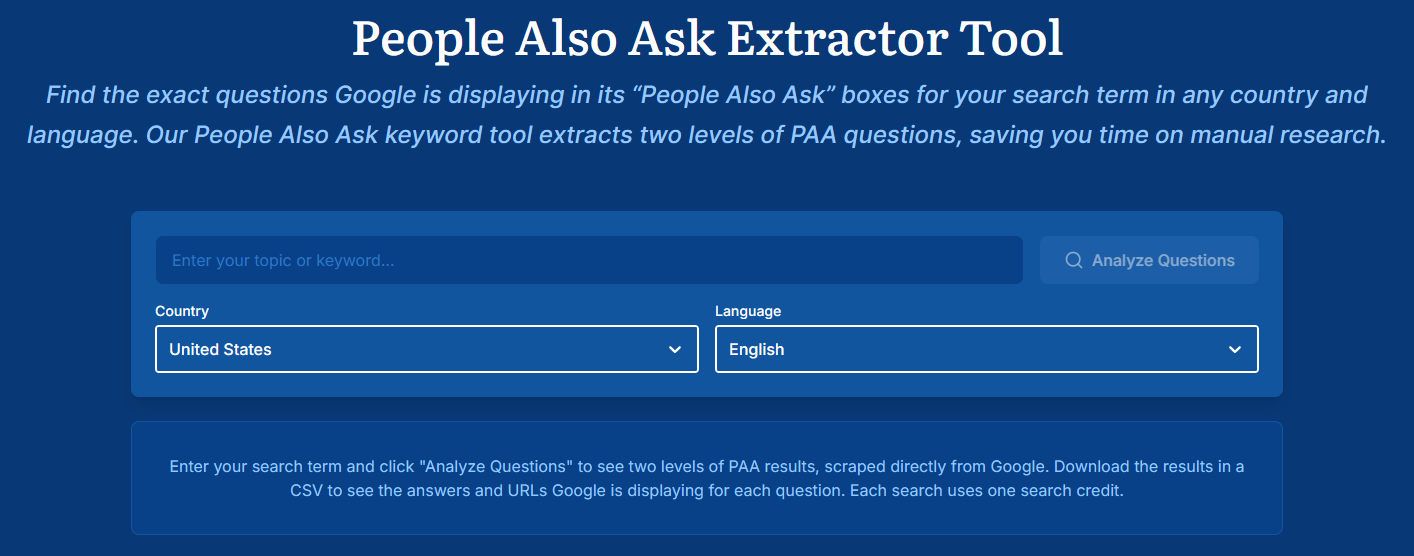
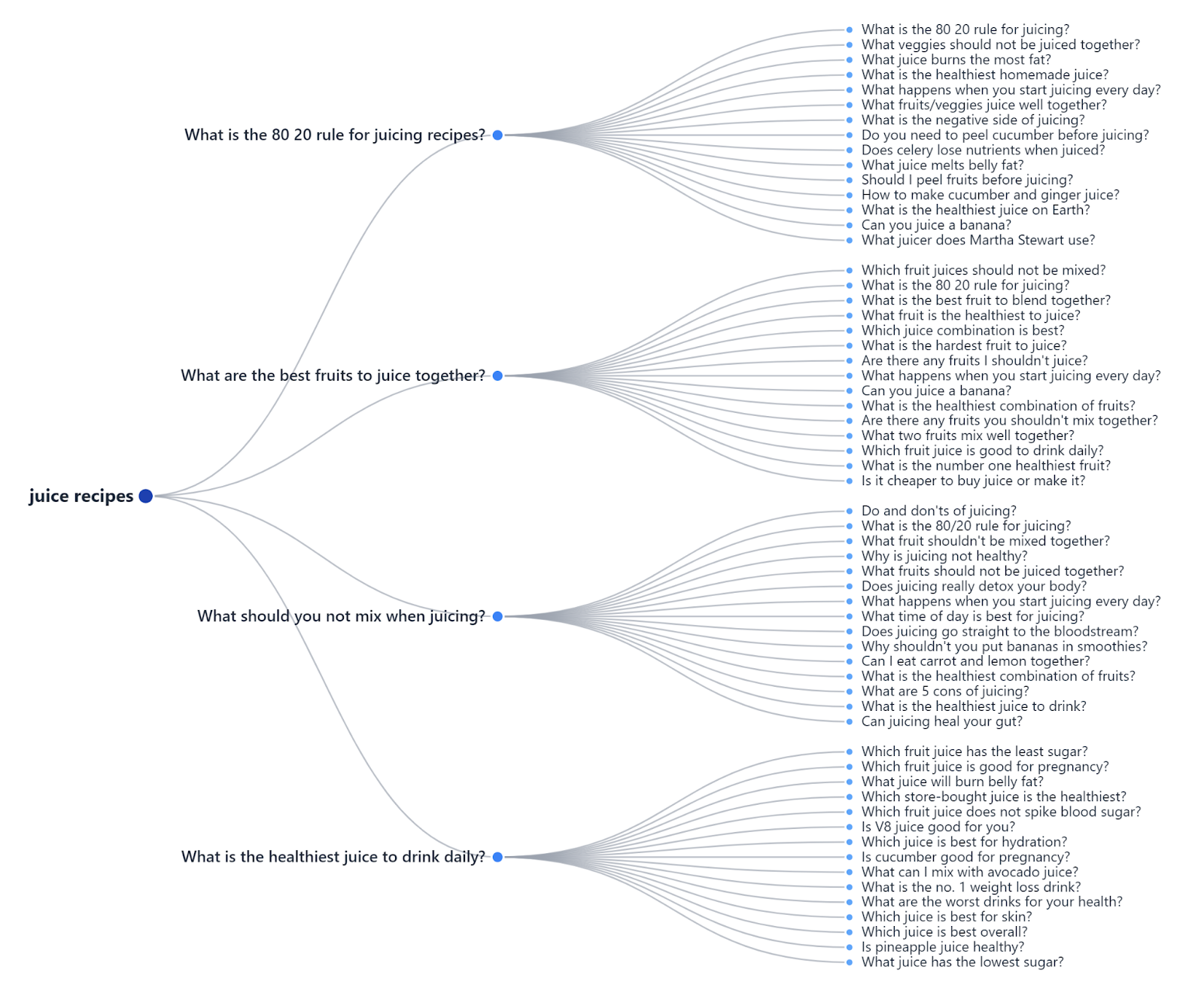
Enter your search query in Answer Socrates’ PAA Extractor, and it will show you the four main questions in the PAA section as well as up to 15 secondary questions for each of these. That means you get up to 60 questions for your main search term.
This question hierarchy is displayed in a visual branching diagram which you can download as a PNG.
I also recommend you download the CSV file, because this shows you the answers Google is currently displaying for each question, along with the website it’s pulling the answer from. You’ll need this information in step 4.
If your initial search reveals some great questions that you think you should dig deeper into, run a new search for those questions, and so on, until you have a comprehensive question list.
Answer Socrates offers a free plan with up to 3 searches per day, and paid plans start at just $9/month.
Step 3: Cluster your questions
Once you've extracted the questions, you need to consider how to use them in your content. This is a process known as keyword clustering.
Don’t assume that just because a question appeared in a PAA box for your main query, it belongs in the same blog post. Sometimes PAA questions are closely related, but others branch out into different topics.
Our full keyword clustering guide explains more about this, but in a nutshell:
- List all the questions you’ve discovered relating to your topic
- Remove any that are irrelevant or don’t align with your business goals
- Group them into topic clusters by identifying those that are closely related and share similar intent
I usually use Answer Socrates’ keyword clustering feature for this, and it saves a couple of hours of manual sorting time on a list of 100-200 questions.
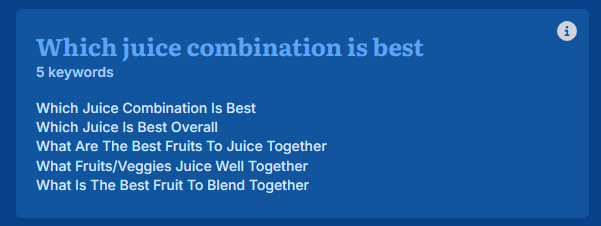
You may be able to use some questions in existing blog posts, while others might require a fresh piece of content.
Aim to answer 4-8 PAA questions per article. This provides enough depth to demonstrate expertise without diluting your focus.
Step 4: Add questions in headers and write snippet-friendly answers
The best way to optimize your content for PAA features is by using the exact questions in H2 and H3 headings. Use questions for some of the headings in your content, then add an FAQs section at the end for any additional related questions.
Google's PAA algorithm favors concise, direct answers that immediately address the user's question. Your opening 40-60 words for each PAA question must provide a complete answer.
Start each answer section by incorporating the exact words from the question. This helps search engines see that your answer is relevant to the question.
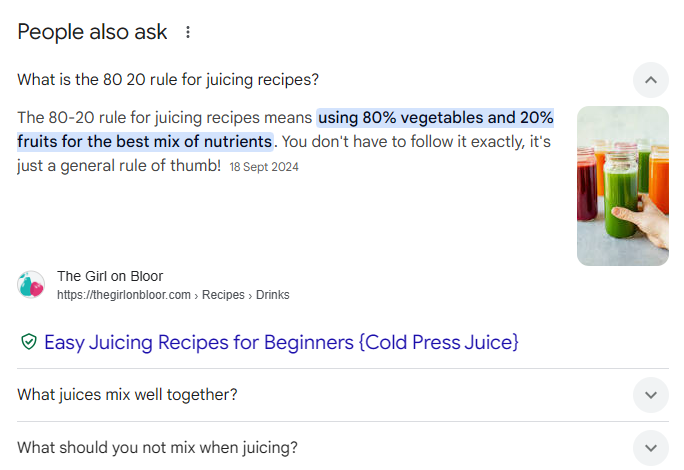
The screenshot above shows a good example. The answer to the question “What is the 80 20 rule for juicing recipes?” doesn’t jump straight into the answer, but begins by incorporating the question: “The 80-20 rule for juicing recipes means…”
After your direct answer, expand with supporting details, examples, and context. Use formatting that Google commonly features in PAA boxes: numbered lists for step-by-step processes, bullet points for feature comparisons, and tables for data comparisons.
Each format signals different types of information and can influence whether Google selects your content for display.
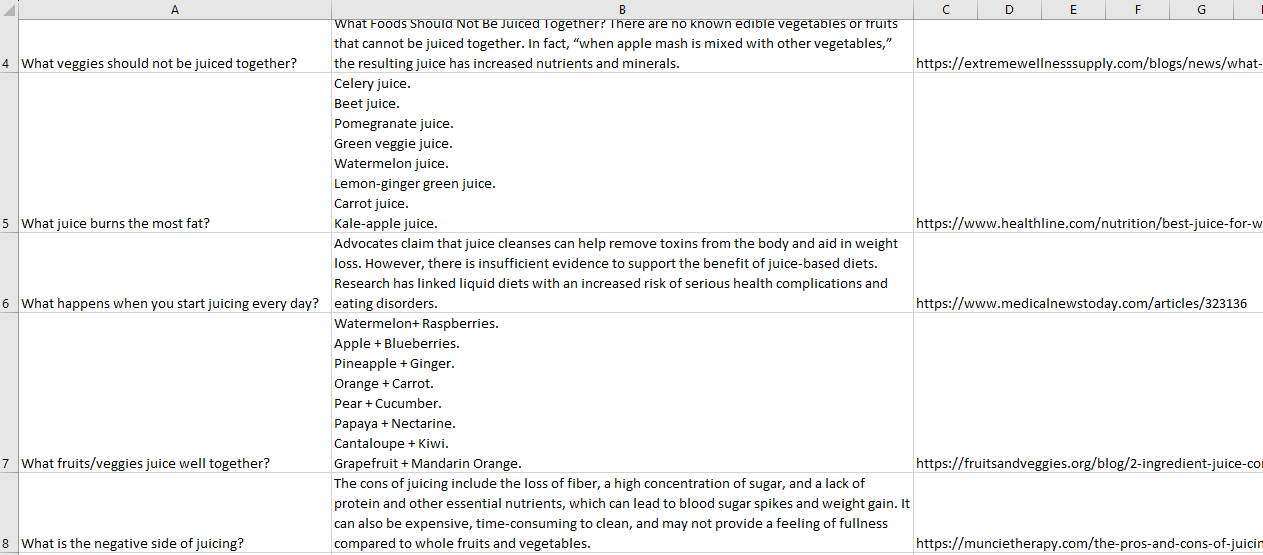
This is where it’s helpful to check your CSV download from Answer Socrates and see what is currently being featured for that question. It makes sense to match whatever Google is rewarding right now.
Structure each PAA section as self-contained content. Someone should be able to read just that section and get complete value, even if they never see the rest of your article.
Step 4: Build topical authority & internal linking
Google doesn't award PAA placement based solely on individual answers - it considers your site's overall authority on the topic. A single blog post answering PAA questions in isolation has less ranking potential than content that's part of a comprehensive topical cluster.
Develop a pillar page strategy where your main PAA-optimized article serves as the central hub, linking to more detailed subtopic pages.
This interconnected content architecture signals topical depth to Google's algorithm.
Don't forget about internal linking within your FAQ sections. Link to related articles on your site using descriptive anchor text that reinforces your topical authority.
If you're answering a question about how to make juice at home, link to your detailed guide to the best juicers, using relevant anchor text rather than generic "click here" language.
Consider expanding successful PAA content over time. If one of your PAA answers starts ranking well, develop it into a dedicated article that explores the topic in greater depth. This expansion strategy can capture additional long-tail keywords while reinforcing your authority on the subject.
Step 5: Monitor, test, and iterate
PAA optimization requires ongoing attention, since rankings can shift as Google tests different content sources and as competitors optimize their own PAA strategies.
Manually monitoring your PAA rankings is very time-consuming, so I recommend using a rank tracking tool that alerts you when you have gained or lost a feature for your selected keywords.
Test different answer formats for underperforming PAA sections. If your paragraph-style answer isn't earning PAA placement, try reformatting it as a numbered list or table. Google's preference for answer formats can vary by query type and search intent.
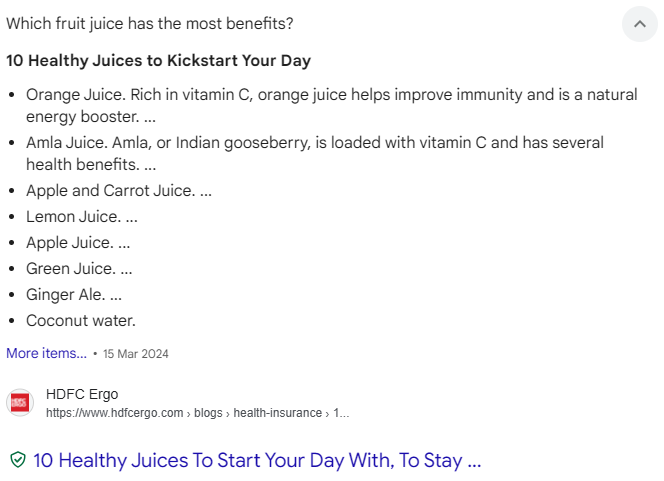
It’s also a good idea to create a content backlog system for PAA questions you're not currently targeting. As your site's authority grows, you can tackle more competitive PAA opportunities that weren't realistic when you started.
This systematic approach ensures you're always working toward expanded PAA coverage.
Common PAA Ranking Mistakes
I have been optimizing websites for PAA answers for over six years, and in that time I have learned from plenty of mistakes (my own and others’).
By avoiding these common errors, you can fast-track your PAA optimization success:
- Writing overly long answers: Many writers think comprehensive equals better, but PAA boxes favor concise, direct responses. If your answer spans 200 words before getting to the point, Google will likely choose a competitor's 40-word definition instead. Lead with the direct answer, then expand with supporting details.
- Stuffing content with questions: Not every heading in your article needs to be a question. In fact, as a general rule, I’d say no more than 50% of your headers should be questions (excluding your FAQs section).
- Ignoring answer format variety: PAA answers include plain text, bullet lists, tables, and even videos. Sticking to paragraph format for every PAA answer limits your ranking potential. Instead, match your format to the question type and test variations.
- Targeting PAA questions without considering search intent: Not every PAA question will align with your business goals. Focus on questions that attract your ideal customers rather than chasing rankings for the sake of it.
In general, PAA optimization should be an add-on to your main SEO content strategy, not the other way around.
Transform Your PAA Strategy Today
Ranking in People Also Ask boxes isn't about luck or hoping Google notices your content. It requires systematic identification of PAA opportunities, strategic answer formatting, and consistent optimization based on performance data.
Remember the core workflow:
- Identify opportunities based on search intent
- Extract and cluster relevant questions
- Write snippet-friendly answers with proper formatting
- Build supporting topical authority
- Monitor results to iterate your approach.
Success comes from treating PAA optimization as an ongoing process rather than a one-time task.
Ready to implement this strategy systematically? Answer Socrates eliminates the guesswork by showing you exactly which questions appear in search results, organizing them into actionable clusters, and providing the data you need to prioritize your optimization efforts.
Try Answer Socrates for free and start capturing those valuable PAA placements.
FAQs
Do only high authority sites win PAA boxes?
High domain authority helps, but Google awards PAA placement primarily based on answer quality and relevance to the specific question. Mid-authority sites regularly outrank industry giants in PAA boxes by providing more direct, useful answers to user questions. Focus on comprehensive, well-structured answers rather than worrying about domain metrics you can't quickly change.
How many PAA questions should I answer per article?
Target 4-8 PAA questions per article for optimal focus and depth. Answering too few questions misses opportunities, while cramming 15+ questions creates unfocused content that satisfies no one well. Group related questions logically and ensure each answer provides genuine value rather than trying to achieve maximum coverage.
What are the best tools for extracting PAA questions?
Answer Socrates is the best PAA tool because it scrapes data directly from Google and gives you the answers currently being featured. AnswerThePublic and AlsoAsked work in a similar way, but their free plans don’t include CSV exports.
What if Google changes its PAA algorithm?
Algorithm updates affect PAA display and selection criteria, but the fundamental principles remain consistent: Google rewards direct, helpful answers to user questions. Focus on creating genuinely useful content rather than trying to game specific algorithmic preferences.
Is AI taking over PAA answers?
It’s true that an increasing number of PAA answers are AI-generated, which reduces the opportunity for your website to rank there. However, the majority of answers are still direct citations, so you shouldn’t give up altogether on optimizing for them.
Is using a PAA extractor tool safe and allowed?
Yes, using a PAA extractor tool is completely safe and follows Google's guidelines. These tools simply automate the manual process of collecting publicly visible search data. Google encourages understanding user intent and creating helpful content - PAA extractors help you do exactly that more efficiently.
Can PAA answers cannibalize my main content rankings?
PAA placement typically enhances rather than cannibalizes main keyword rankings. Sites appearing in multiple PAA boxes often see improved rankings for their primary target terms because Google interprets comprehensive question coverage as topical authority. Strategic internal linking from PAA sections to main content pages can actually boost overall site performance.
You're reading Human-Led SEO
A regular column dedicated to illustrating how a searcher-first approach to SEO enables businesses to generate more revenue in less time from organic search.
Coming Soon